



























World Health Day 2026: In a Fractured World, Health Must Still Unite Us
In the chaos of war, healthcare does not collapse in one dramatic moment, it collapses silently, piece by piece, until survival itself becomes uncertain.
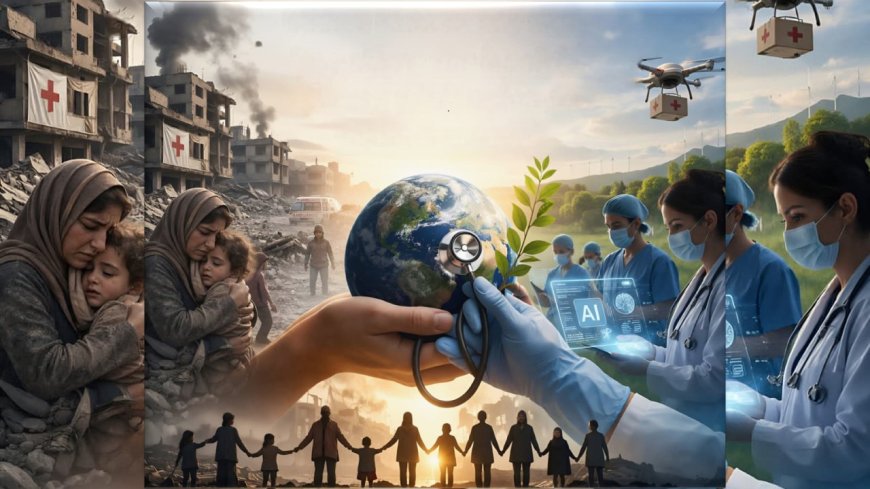
Every year on 7 April, the world observes World Health Day, but in 2026, the theme feels less like a slogan and more like a moral necessity: “Together for health. Stand with science.” The World Health Organization has launched it as a year-long global campaign urging people, institutions, and governments to trust evidence, rebuild faith in public health, and work collectively through a One Health approach that protects people, animals, plants, and the planet.
This year, the message arrives at a deeply painful time for humanity. Across the world, war zones and conflict-hit regions continue to remind us that the first casualty of violence is not only peace; it is also health, dignity, and the basic right to survive.
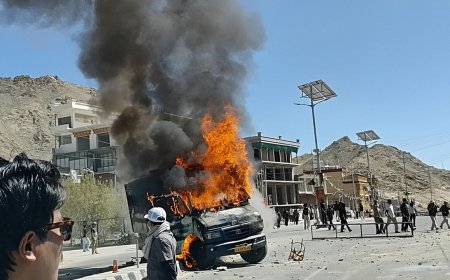
When bombs fall, they do not merely bring down walls and rooftops; they tear apart hospitals, maternity wards, ambulances, oxygen supply chains, vaccination programs, drinking water systems, sanitation networks, and the fragile routines that keep ordinary lives safe.
In the chaos of war, healthcare does not collapse in one dramatic moment; it collapses silently, piece by piece, until survival itself becomes uncertain.
Behind every image of smoke and rubble lies a quieter and more intimate emergency. It is the child who misses routine immunization and becomes vulnerable to preventable disease. It is the diabetic patient searching desperately for insulin that may no longer be available.
It is the pregnant woman who goes into labour without a doctor, without electricity, without transport, and sometimes without hope. It is the elderly person whose blood pressure medicines have run out, the injured civilian whose wound remains untreated, and the frightened child who learns too early what fear sounds like in the middle of the night.
These are not just medical failures; they are human tragedies unfolding in slow motion. War leaves scars that medicine alone cannot easily heal. It breeds hunger, displacement, infectious disease outbreaks, untreated injuries, disability, grief, anxiety, depression, and long-lasting psychological wounds that often survive long after the gunfire ends. The body suffers, but so does the mind.
The trauma of losing a home, a family member, a limb, or a sense of safety can shape an entire lifetime. In conflict settings, even the most common illnesses become dangerous because access to treatment collapses.
A simple fever can become fatal. A wound can turn septic. Childbirth can become a life-threatening gamble. In such a world, health can no longer be viewed as an isolated hospital matter; it is deeply tied to peace, governance, environment, science, and above all, human solidarity.
This is exactly why the World Health Day 2026 theme matters. To stand with science in today’s world is not only to support laboratories or research papers. It means standing with vaccines over rumours, public health systems over propaganda, mental health care over silence, and evidence-based humanitarian response over political neglect. Science becomes most valuable when humanity is most vulnerable.
The WHO’s emphasis on One Health also becomes strikingly relevant in times of war and global instability. When conflict displaces populations, disrupts animal habitats, contaminates water, damages food systems, and weakens disease surveillance, the consequences do not remain local.
Human health, environmental health, and community resilience are all interconnected. WHO has stressed that prevention and preparedness must be built on collaboration, trust, and science-led action across sectors and borders. In many ways, the theme is also a reminder against another modern threat: ‘misinformation’.
Today, fear spreads almost as fast as disease. In crises, false cures, panic messages, and half-truths often travel faster than verified guidance. That is why this year’s campaign asks people not only to seek care, but also to choose evidence, trust facts, and support science-led health decisions. PAHO has captured this spirit clearly: “Ask. Share. Stand with science.”
On this World Health Day, perhaps the most human message is this: “Even when the world is divided by borders, ideology, and conflict, illness still speaks one language, and healing must too”. A healthier future cannot be built on denial, destruction, or distrust. It can only be built when humanity chooses compassion, cooperation, and science. Because in a wounded world, standing with science is also a way of standing with life.
Bhubaneswar
ipsitadr@yahoo.in